High blood pressure kills quietly. It has no symptoms until it causes a heart attack, stroke, or kidney failure. In India, an estimated 30% of adults are hypertensive, and more than half of them do not know it. Of those who are diagnosed, fewer than 15% have their blood pressure adequately controlled.
These numbers are not a failure of medication — there are many effective drugs. They are a failure of monitoring, and a missed opportunity: blood pressure is one of the most lifestyle-responsive conditions. For many people, diet, movement and sleep can bring a meaningful reduction in blood pressure, and sometimes their doctor can reduce the dose or delay the need for medication. This guide explains what actually works and why.
What blood pressure numbers actually mean
Blood pressure is measured as two numbers: systolic (the pressure when the heart contracts) over diastolic (the pressure when it relaxes). A reading of 120/80 mmHg is considered optimal. Stage 1 hypertension begins at 130/80; stage 2 at 140/90.
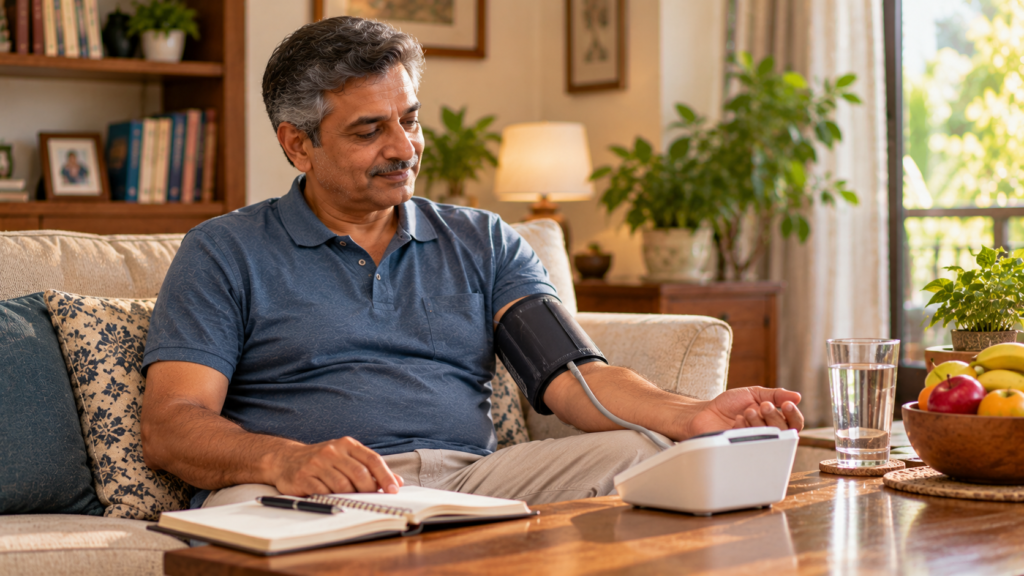
One high reading does not diagnose hypertension — blood pressure fluctuates throughout the day, rises with anxiety, and is often elevated in a doctor’s office (this is called white coat hypertension). Diagnosis should be based on multiple readings, ideally including home measurements taken in the morning before eating or medication. I ask my patients to take their blood pressure twice in the morning and twice in the evening for a week before we make any treatment decisions. The average of those readings is far more meaningful than one clinic number.
Salt — the part most people understand wrong
The connection between sodium and blood pressure is real, but it is not uniform. About 30–50% of people are “salt-sensitive” — their blood pressure rises meaningfully with high sodium intake and falls when sodium is reduced. The rest see relatively little change. Salt sensitivity is more common in Indian populations, in older adults, in people with kidney disease, and in those with diabetes.
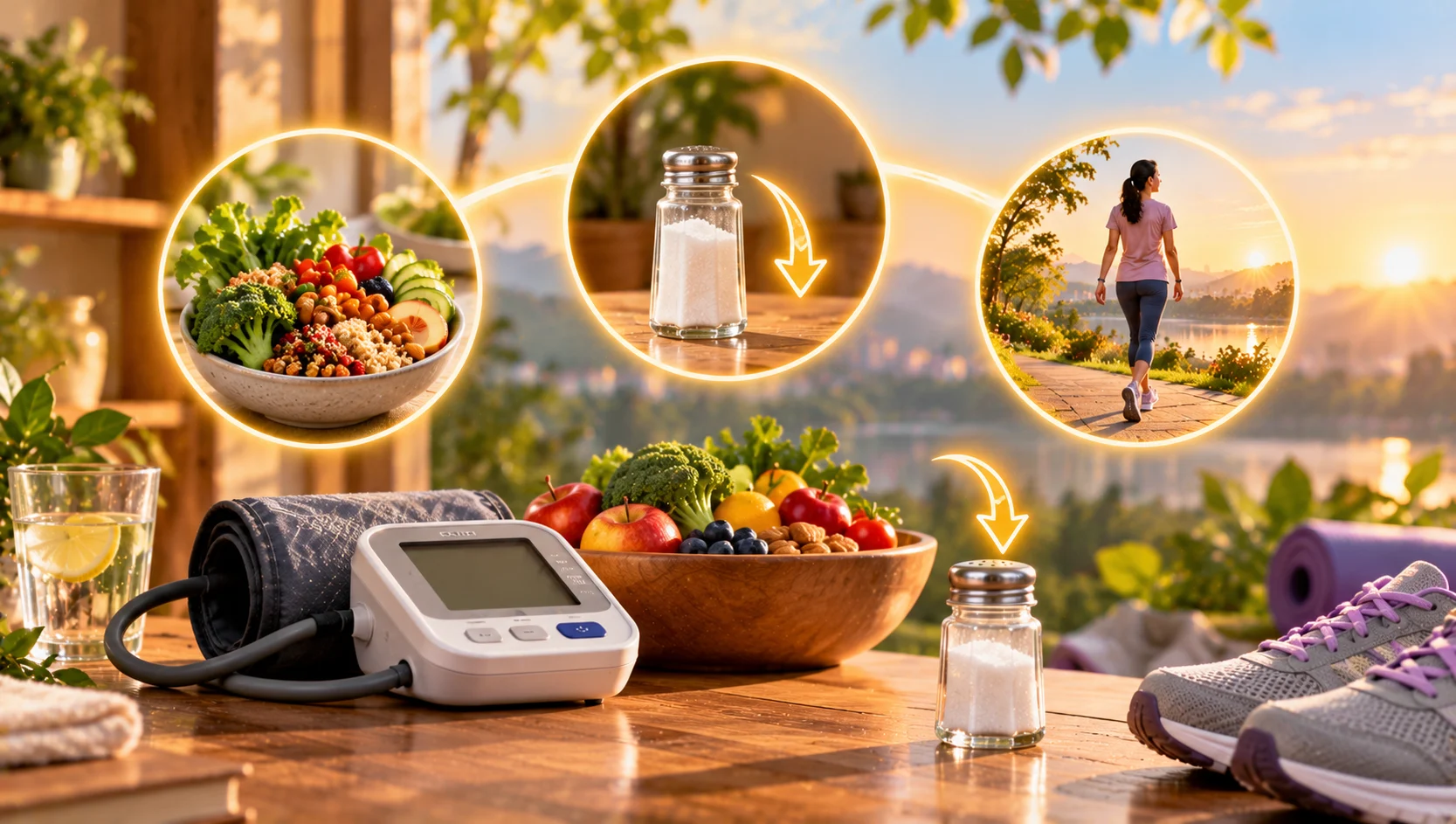
The current evidence suggests reducing sodium to 2–3 grams daily (roughly one teaspoon of salt from all sources) is reasonable for people with hypertension. The more impactful insight: the largest source of sodium in the Indian diet is not table salt added at the table — it is sodium in packaged foods, pickles, papads, namkeen, and processed snacks. Reading food labels matters more than removing the salt shaker.
Potassium counteracts sodium’s blood-pressure-raising effect. Most Indians eat far too little potassium. The best sources in the Indian diet: bananas, sweet potatoes, spinach, dal, beans, tomatoes, and coconut water. Increasing dietary potassium often has as large a blood pressure effect as reducing sodium.
The DASH diet — what it is and why it works in India
The Dietary Approaches to Stop Hypertension (DASH) diet is the best-studied dietary intervention for blood pressure. In controlled trials, it lowered systolic blood pressure by about 8–14 mmHg — comparable to the effect of a single blood pressure medication.
The DASH diet is: high in fruits, vegetables, whole grains, legumes, and low-fat dairy; low in saturated fat, red meat, and added sugar; and moderate in sodium. For an Indian patient, this translates well: dal, sabzi, roti, curd, fruits, and minimal maida and packaged food. The Indian vegetarian diet, when cooked with moderate oil and minimal salt, is already close to DASH. The problem is usually the extras — the fried snacks, the biscuits, the sweetened chai, and the processed foods that have crept into daily eating.
Exercise: a bigger effect than most people expect
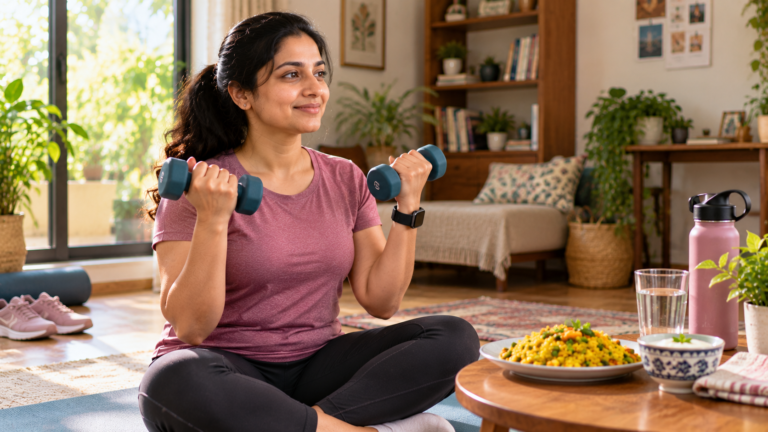
Aerobic exercise (brisk walking, cycling, swimming) reduces systolic blood pressure by 5–8 mmHg on average — and up to 10–15 mmHg in people with higher baseline pressures. This is consistent across dozens of trials. The effect comes not from weight loss but from the direct effect of regular exercise on vascular elasticity and the autonomic nervous system.
The minimum effective dose: 150 minutes per week of moderate-intensity aerobic exercise, spread across at least five days. Isometric exercise (wall sits, plank holds) has shown surprisingly large blood pressure reductions in recent trials — about 8 mmHg systolic on average — and may be a useful addition for patients who cannot do sustained aerobic exercise. Resistance training (weights) has a smaller but still meaningful effect.
Weight and blood pressure
Excess body fat — particularly visceral fat around the abdomen — is one of the most direct drivers of hypertension. For every kilogram of weight lost, systolic blood pressure falls by approximately 1 mmHg. A 10 kg weight loss is typically linked to about a 10 mmHg reduction. For some people with stage 1 hypertension and central obesity, weight loss alone can bring blood pressure into the normal range, which is worth checking with your doctor.
The mechanism: visceral fat increases angiotensin II (a potent vasoconstrictor), activates the sympathetic nervous system, and promotes insulin resistance — all of which raise blood pressure. Reducing visceral fat can ease all of these.
Sleep, stress, and blood pressure
Chronic poor sleep (under six hours per night) is associated with a 20% higher risk of hypertension. Blood pressure normally dips during sleep — in people with poor sleep or obstructive sleep apnoea, this dip does not happen, and they wake with higher pressures that set the tone for the entire day.
Obstructive sleep apnoea is a severely underdiagnosed cause of hypertension in India. Any patient with snoring, daytime sleepiness, morning headaches, and difficult-to-control blood pressure should be evaluated for sleep apnoea before adding more blood pressure medications. Treating sleep apnoea with CPAP can reduce systolic blood pressure by 6–10 mmHg in affected patients.
Chronic stress activates the sympathetic nervous system continuously, keeping blood pressure elevated. Mind-body practices including yoga, pranayama, and meditation have evidence for blood pressure reduction (5–8 mmHg systolic in trials), independent of their effect on stress perception. I consider these complementary, not alternative, to other interventions.
When medication is necessary
Lifestyle changes take two to three months to show their full effect. Medication is indicated immediately — without waiting to try lifestyle first — when blood pressure is above 160/100 mmHg, when there is target organ damage (kidney, heart, or eyes), when there is diabetes or cardiovascular disease present, or when systolic blood pressure is above 130–140 with multiple other risk factors.
Medication and lifestyle change are not alternatives — they work best together. A patient who takes their blood pressure medication but eats high-sodium food and is sedentary will need two or three drugs to achieve control. The same patient, with a good diet and regular exercise, may need fewer medicines, as decided by their doctor. This is the conversation worth having with your doctor. Medication helps control blood pressure; lifestyle change supports the underlying causes.
What to do starting today
Check your blood pressure. If you are over 30 and have not had it checked in the last year, do it today. If you have hypertension: take your readings at home, reduce packaged food and sodium, increase vegetables and dal, walk for 30 minutes five days a week, and if you are overweight, work on reducing it with a realistic long-term plan. If your blood pressure is above 160/100, see a doctor this week.