My Journey from Studying the Body to Exploring the Whole Person
Some journeys begin with a destination in mind. Others begin with a question.
Some journeys begin with a destination in mind.
Others begin with a question.
My journey into health, healing and spirituality began much earlier than I understood it at the time. It began in childhood, in a home where yoga, Ayurveda, spirituality and clinical healing were not separate subjects. They were simply part of everyday life.
Looking back, I can see that many of the questions that guide my work today were already taking shape when I was a child.
What is health? What makes healing possible?
What is the relationship between the body and the mind?
Can ancient wisdom and modern science learn from each other?
And, ultimately, is human wellbeing complete if we care only for the body?
My journey has taken me from a young boy practising yoga at home, to a student of naturopathy and yoga, a clinician, researcher, teacher and scholar—and eventually, a spiritual seeker exploring dimensions of life that cannot be understood through clinical knowledge alone.
This is the story of that journey.
The Beginning: A Childhood Surrounded by Yoga and Healing
At the age of seven, I was fortunate to have parents who were deeply committed to the yogic way of life.
It was through them that I was introduced to Amroli Yogic Sadhana.
For me, yoga was therefore not something I discovered much later in life through a book, a course or a health trend. It was part of my childhood environment.
My father, Dr. Shashi Patil, was a well-known traditional Ayurvedic vaidya of his time and specialised in Shivambu Chikitsa. Because of his work and interests, our home was frequently visited by spiritual scholars, traditional healers and people deeply involved in different dimensions of Indian health and spiritual traditions.
The atmosphere at home was filled with discussions.
There were conversations about spirituality, Ayurveda, yoga, healing, clinical experiences and the deeper dimensions of human life.
As a child, I did not understand the full significance of many of these conversations.
But I absorbed them.
I began to appreciate the importance of yogic principles and gradually started practising different yogic techniques and kriyas.
The seeds were being planted.
I simply did not know yet what kind of tree they would become.
At Fifteen: From Watching Healing to Participating in It
By the age of fifteen, my curiosity had become more practical.
I began accompanying my father regularly to his clinic and assisting him in his work.
There, I had the opportunity to see patients who had been suffering from chronic and debilitating conditions.
Some of their recoveries made a deep impression on me.
As a teenager, I began developing a strong faith in traditional systems of healing—particularly Ayurveda, yoga and naturopathy.
But my interest was not limited to simply believing in these systems.
I wanted to understand how they worked.
While continuing my formal education, I assisted my father in various clinical procedures. This gave me practical exposure at a very early age to areas such as Ayurvedic medicine formulation, Panchakarma, massage therapy and clinical acupressure.
The clinic became an informal classroom.
My father became one of my earliest teachers.
And the patients became, in many ways, my first lessons in the complexity of human health.
The Question That Changed the Direction of My Education
As a science student, I gradually began to experience a tension within myself.
On one hand, I could see the effectiveness and depth of many traditional Indian approaches to health.
On the other hand, I was increasingly exposed to modern scientific thinking.
I began to feel that these traditional systems had valuable knowledge, but that they also needed to be studied, investigated and correlated with modern medical understanding.
I did not want to choose between tradition and science.
I wanted to understand whether the two could speak to each other.
That question influenced my decision to pursue formal medical education.
In the early 1990s, under my father’s guidance, I entered formal training in naturopathy and yogic sciences. I eventually completed my Bachelor of Naturopathy and Yogic Sciences (B.N.Y.S.), a full-time residential programme followed by internship.
My education exposed me not only to naturopathic medicine and yoga, but also to a broad range of therapeutic approaches.
I developed experience in modern and traditional diagnostic methods, clinical acupuncture, manipulative therapies, nutrition, hydrotherapy, physio-electro therapies, Ayurvedic Panchakarma and naturopathic medicine.
For me, education was not about replacing what I had learned at home.
It was about expanding the framework through which I could understand it.
From Student to Seeker: Learning Across India
After completing my undergraduate education, I travelled extensively across India.
I wanted to learn directly from people who had spent years practising and teaching nature cure, Ayurveda and yoga.
Books could give me information. Institutions could give me qualifications. But I wanted experience. I wanted to meet teachers.
I wanted to observe how different traditions were actually practised.
I wanted to understand the wisdom behind the techniques rather than simply memorise them.
This period of travelling and learning expanded my perspective considerably.
Eventually, I returned home and joined my father in his work.
Together, we worked toward expanding his centre into a larger facility—a 30-bedded hospital dedicated to yoga and naturopathy.
At the same time, life was changing in other ways.
I got married and began the journey of family life.
My professional identity was also evolving.
I was not only a clinician anymore.
I was becoming a teacher.
Teaching, Writing and Taking Healing to the Community
I have always been passionate about teaching.
Alongside clinical work, I worked with Ayurveda colleges as specialised faculty.
I also began writing and publishing because I felt that much of the knowledge surrounding drugless healing remained inaccessible to the wider public.
I started a monthly Hindi magazine to share ideas related to Shivambu, yoga, naturopathy and other approaches to natural healing.
I travelled to Germany and other parts of Europe to participate in international conferences and seminars.
I conducted numerous health camps and yoga workshops in both rural and urban areas.
These experiences brought me face-to-face with people from very different backgrounds.
And they reinforced something I had already begun to understand:
Health knowledge has value only when it can ultimately serve people.
The Scientist Within the Healer
But another question continued to follow me.
I had seen traditional practices work. I had experienced them personally.
I had learned from practitioners and teachers.
Yet as a student of science, I wanted something more.
I wanted to understand what was happening.
Could traditional, experience-based healing approaches be studied scientifically?
Could yoga and meditation be investigated using modern research methods?
Could we bring together the best of traditional knowledge with the best of modern scientific inquiry?
These questions eventually led me toward higher education and research.
Entering the World of Yoga Research
In 2000, I went to Swami Vivekananda Yoga Anusandhana Samsthana (sVYASA) in Bangalore for further study in yoga therapy.
There, my world expanded again.
I studied yogic philosophy and Vedantic thought under experienced teachers and scholars.
Something important happened during this period.
Until then, I had primarily approached yoga through the lens of health and therapy.
Now I began to encounter yoga as something much larger.
Yoga was not merely a collection of postures.
It was not merely a therapeutic technique.
It was also a philosophical and spiritual discipline concerned with understanding the human being at a much deeper level.
This awakened in me a stronger spiritual inclination.
At the same time, I continued my clinical work at Arogyadhama, a 200-bedded yoga-therapy health home associated with sVYASA, where I was involved in clinical work, trials and retreats. My professional record also documents my research fellowship at sVYASA during this period.
The clinician and the seeker were beginning to grow together.
The PhD: Studying Meditation Through Science
My next step was doctoral research.
I completed my Ph.D. in Psychophysiology at Swami Vivekananda Yoga Anusandhana Samsthana (sVYASA), Bangalore, under the guidance of Dr. H. R. Nagendra and Dr. Shirley Telles.
My doctoral thesis was titled:
“A Comparison of Psychophysiological Effects of Two Yogic Meditation Techniques.”
During my doctoral research, I studied psychophysiological variables before, during and after the practice of cyclic meditation, a distinctive yoga-based practice combining movement and awareness.
The research examined what happened to the human system during and following such practices.
This was an important phase of my life because it brought together two worlds that had previously seemed very different:
the world of spiritual practice and the world of scientific investigation.
I began to appreciate that asking scientific questions about a spiritual or yogic practice did not necessarily diminish its depth.
In some ways, careful research could help us understand it more clearly.
My research resulted in publications examining areas such as p300, oxygen consumption, respiration, heart-rate variability, performance and energy expenditure associated with yoga-based relaxation and meditation practices.
One of the ideas that emerged from this work was the description of meditation as a state involving wakeful rest with sustained and selective attention.
For me, research was never only about publishing papers.
It was about learning how to ask better questions.
When Research Met Clinical Reality
As my research experience grew, my clinical work continued.
Over the years, I encountered people dealing with chronic health conditions and complex lifestyle-related problems.
These experiences strengthened my interest in the relationship between lifestyle, stress, behaviour, nutrition, mind and physical health.
I became increasingly convinced that chronic health problems cannot always be understood by looking at one symptom or one organ alone.
A person’s sleep may matter. Their food may matter. Their activity may matter. Their stress may matter.
Their relationships may matter.
Their beliefs and patterns of thinking may matter.
And sometimes, the meaning they give to their life may matter as well.
This gradually expanded my understanding of what healthcare could mean.
Building Anandkunj: A Family Dream
In 2005, I established the Shivambu Health Research Institute, with my father as its president.
Around the same period, my elder brother, who was serving at a senior rank in the Indian Air Force, decided to join hands in this larger mission.
Together, as a family, we began working toward a shared dream: to create a larger space where healthcare, research, education, nature and spiritual living could come together.
This dream eventually took shape as Anandkunj.
Spread across a large natural setting, Anandkunj was envisioned as an ashram and centre for integrative medicine and holistic living.
The natural environment itself became part of the experience.
Fresh air. Sunlight. Water. Trees.
Birds. Green hills.
Distance from the noise and pollution of urban life.
But Anandkunj was never intended merely to be a beautiful retreat.
The larger vision was to create a place where healthcare, education, scientific research, holistic healing and social and spiritual upliftment could come together.
The guiding aspiration was simple:
the best of the East and the best of the West.
Today, my professional record describes Anandkunj as a centre for preventive and integrative medicine, where this long-standing vision continues through clinical and educational work.
The Turning Point: From Healing the Body to Understanding the Self
For many years, I had been studying the body.
I had studied anatomy, physiology, nutrition and therapeutic approaches.
I had worked with patients. I had conducted research. I had studied yoga. I had explored meditation.
But somewhere within me, another question was becoming stronger:
Is health the ultimate goal?
Or is health a foundation for something deeper?
This question became especially meaningful when my spiritual journey took a new direction.
Discovering Tejgyan
Around 2010, I was introduced by a relative to a system of spiritual wisdom known as Tejgyan.
Because I already had a foundation in yoga and had long felt an inner calling toward spirituality, I was naturally drawn toward exploring it.
I attended my first retreat. Something shifted.
I felt attracted to the teachings and to the spiritual guidance of Sirshreeji.
What followed was not simply the addition of another spiritual practice to an already busy professional life.
It was a shift in perspective.
Through a step-by-step process of spiritual understanding and inner inquiry, I began looking at life differently.
My questions changed. Earlier, I had primarily asked: How can a person become healthier? Now another question emerged:
Who is the person who is seeking health?
The distinction may appear subtle. But for me, it was profound.
Spirituality Entered Family Life
The transformation was not confined to me.
As my family observed changes in my life, my wife, parents and brother also became interested in the teachings and joined the wider journey associated with the Happy Thoughts organisation.
Shravan, Seva and Bhakti gradually became part of our lives.
Our family began visiting MaNaN Ashram, on the outskirts of Pune, to attend live sessions with Sirshree.
MaNaN itself became an important part of this chapter.
The large natural campus was dedicated to spiritual evolution and holistic living.
Over time, my interaction with the Tejgyan Foundation deepened.
Eventually, a five-day residential Health Retreat was designed for seekers of Tejgyan in Pune.
The reasoning behind it was simple:
If the body and mind are not reasonably healthy and balanced, spiritual practice can become difficult.
Health therefore became not merely an end in itself, but a foundation for deeper inner work.
The health retreats and yoga workshops at MaNaN gradually became an important part of this journey.
A Profound Conversation with My Father
One of the deepest chapters of my journey came in 2017.
After a small accidental fall in August that year, my father, Dr. Shashi Patil, decided to undertake the Jain spiritual practice of Sallekhana (Santhara).
This was a period of profound reflection for our family.
My father had spent his life immersed in healing and spiritual inquiry.
Now, as he approached the final phase of his life, our conversations took on a different depth.
There were discussions about life. About spirituality. About the purpose of human existence. About the inner calling.
And about what should ultimately receive priority in one’s life.
During this precious period, my father told me something that has remained deeply etched in my heart:
“Please give first priority to your spiritual quest. Never ever ignore your inner calling.”
Those words affected me deeply.
For most of my life, I had been trying to understand health.
I had studied the body. I had studied the mind. I had studied yoga and meditation. I had studied research.
I had cared for patients. I had taught. I had built institutions.
But my father was reminding me that there was another dimension of life that I must not lose sight of.
The inner journey.
From Healthcare to Whole-Person Wellbeing
This was not a rejection of medicine.
It was not a rejection of science.
It was not a rejection of clinical knowledge.
Instead, it became an invitation to place all of these within a larger understanding of human life.
I began to see health differently. The physical body is important.
But human beings are more than the physical body.
Mental wellbeing matters. Emotional balance matters. Relationships matter. Social wellbeing matters.
Values matter. Meaning matters.
And for those who seek it, spiritual growth matters.
The question therefore changed from: “How do I treat this disease?” to a broader set of questions: “Who is this person?”
“What is happening in this person’s life?”
“What does this person need at the physical, mental, emotional, social and spiritual levels?”
“How can healthcare support not only survival, but a more meaningful and harmonious life?”
This became the foundation of what I now understand as whole-person health.
From Spiritual Seeking to Seva
Spirituality, for me, could not remain only an internal pursuit.
It had to express itself through service.
The deeper my understanding of spirituality became, the more I began to see Seva—service—as an important expression of that understanding.
This naturally brought together the different strands of my life.
The clinician in me wanted to help people become healthier.
The researcher wanted to understand what works and why.
The teacher wanted to share knowledge.
The yogic practitioner wanted to help people experience greater balance.
The spiritual seeker wanted to understand the deeper dimensions of human existence.
And the human being in me simply wanted to be useful.
These were no longer separate identities.
They were becoming parts of the same journey.
Sampurna-Swasthya: A Wider Vision of Health
This evolution eventually contributed to the development of Sampurna-Swasthya, a holistic-health initiative associated with MaNaN Ashram.
The word Sampurna means complete or whole.
Swasthya means health.
The concept therefore reflects a vision of health that extends beyond the absence of physical disease.
It includes the physical. The mental. The emotional. The social.
And the spiritual dimensions of human wellbeing.
The initiative grew through health education, workshops, content, retreats and other forms of public engagement.
The purpose was not simply to create another health programme.
It was to encourage people to take responsibility for their wellbeing while recognising that health is multidimensional.
My professional work had brought me toward integrative medicine.
My spiritual journey had brought me toward inner transformation.
Sampurna-Swasthya became one place where these two journeys could meet.
The COVID-19 Years: When Service Became Digital
The COVID-19 pandemic created an unexpected chapter in this journey.
People were isolated. Fear and uncertainty were widespread.
Access to routine healthcare and health education was disrupted.
At that time, I conducted numerous online advocacy courses and consultations.
Technology made it possible to reach people who were physically far away.
The experience reinforced another important lesson:
health education should not be limited by geography.
If knowledge can help someone understand their health, develop healthier habits, manage stress or seek appropriate medical attention at the right time, then sharing that knowledge can itself become a form of service.
This experience further strengthened my interest in creating educational content that could reach a much wider audience.
From the Individual to Society
Over the years, my understanding of health has therefore expanded from the individual to the family, and from the family to society.
A healthier individual can contribute to a healthier family.
A healthier family can contribute to a healthier community.
And healthier communities can contribute to a more harmonious society.
This is why the vision behind Sampurna-Swasthya is ultimately larger than disease prevention.
It is connected with human development and societal upliftment.
The aspiration is to contribute, in whatever small way possible, to the creation of a more aware, balanced and highly evolved society.
The Scholar and the Seeker Are Not Opposites
When I look back at my journey, I no longer see a conflict between science and spirituality.
I see two different ways of asking questions.
Science asks us to observe carefully, investigate, measure, question assumptions and remain open to evidence.
Spirituality asks us to observe ourselves, question our assumptions, look inward and explore the nature of consciousness and existence.
Both require sincerity. Both require discipline. Both require humility.
And both remind us that what we currently know may not be the complete picture.
My years as a medical and scientific student taught me the value of evidence.
My clinical journey taught me the complexity of human beings.
Yoga taught me the importance of practice.
Research taught me the importance of questioning.
And spirituality taught me that knowledge about the world is not the same as knowing oneself.
What I Have Come to Understand About Healing
I do not believe that healing can always be reduced to a single method.
Sometimes a person needs modern medical treatment.
Sometimes surgery is necessary. Sometimes medication is necessary.
Sometimes nutrition and physical activity need attention.
Sometimes sleep and stress need attention.
Sometimes yoga, breathing or meditation can become useful complementary practices.
Sometimes a person needs emotional support.
Sometimes a person needs to change deeply rooted patterns of living.
And sometimes, beneath all these needs, there is a deeper longing for meaning and inner peace.
A responsible approach to health must therefore be able to recognise both the limits and possibilities of every approach.
Traditional wisdom should not be romanticised simply because it is ancient.
Modern medicine should not be rejected simply because it is modern.
Neither should be accepted blindly. The real question should always be:
What is appropriate, what is evidence-informed, what is safe, and what serves this person as a whole?
That is the spirit in which I approach integrative health today.
From Studying the Body to Exploring the Whole Person
When I was seven, I did not know that the yogic practices I was learning would influence the direction of my entire life.
When I was fifteen, I did not know that watching my father work with patients would awaken a lifelong interest in healing.
When I entered formal medical education, I did not know that the desire to scientifically understand traditional systems would eventually take me into psychophysiology research.
When I began studying yoga, I did not know that yoga would lead me beyond therapy and into deeper questions of consciousness and spirituality.
When I entered research, I did not know that studying meditation scientifically would also deepen my personal interest in meditation.
When I helped build Anandkunj, I did not know how profoundly the spiritual dimension would later influence my understanding of health.
And when my father asked me not to ignore my inner calling, I realised that perhaps the journey had never really been about becoming a better doctor alone.
It was about becoming a more complete human being.
The Journey Continues
I still consider myself a student.
There is still much to learn about medicine.
Much to learn about yoga.
Much to learn about Ayurveda and traditional Indian wisdom.
Much to learn about psychology, neuroscience and human behaviour.
And perhaps most importantly, much to learn about oneself.
My professional journey has given me the opportunity to study the human body.
My clinical work has allowed me to witness human suffering and resilience.
Research has taught me to question. Yoga has taught me to practise.
Spirituality has taught me to look within.
And service has taught me that whatever we learn becomes more meaningful when it can benefit others.
Today, I see these not as separate chapters, but as different streams flowing toward the same ocean.
Health. Awareness. Healing. Inner growth.
And service to humanity.
A Different Definition of Success
Earlier in life, success could easily be measured through qualifications, research papers, professional responsibilities, institutions built, patients helped or programmes conducted.
Those things still matter.
But my understanding of success has changed.
Perhaps success is also the ability to become more aware.
To become less reactive. To live with greater compassion. To remain curious. To serve without losing oneself.
To care for the body without becoming obsessed with it.
To develop the mind without becoming trapped in it.
And to explore spirituality without escaping from one’s responsibilities in the world.
For me, this is where the journey of the medical scholar meets the journey of the spiritual seeker.
The Vision of Sampurna-Swasthya
The vision that continues to inspire my work through Sampurna-Swasthya is therefore not simply to help people live longer.
It is to help people explore how they can live healthier, happier, more aware and more meaningful lives.
Physical health provides a foundation.
Mental and emotional wellbeing provide balance.
Healthy relationships provide connection. Purpose provides direction. Spiritual awareness can provide depth.
When these dimensions are approached together, health becomes more than the absence of disease.
It becomes a journey toward wholeness.
That is what Sampurna-Swasthya means to me.
From Medical Scholar to Spiritual Seeker
My journey began with a child learning yoga.
It continued with a teenager watching his father heal people.
It grew through formal medical education, clinical practice, teaching and research.
It deepened through yoga, meditation and psychophysiology.
It expanded through the creation of institutions devoted to health and healing.
And eventually, it turned inward.
From studying the body, I began exploring the mind.
From exploring the mind, I began asking questions about consciousness.
From asking questions about consciousness, I began seeking a deeper understanding of the self.
And from that inner search came a renewed commitment to service.
Perhaps, then, the journey was never really:
Medicine → Yoga → Spirituality.
Perhaps it was always a single journey.
A journey from knowledge to understanding. From healing to wholeness. From self-development to self-realisation.
And from individual wellbeing to service of humanity.
I continue to walk that path. Still learning. Still questioning. Still practising.
Still serving. And still seeking. The journey continues.
A Note on This Story
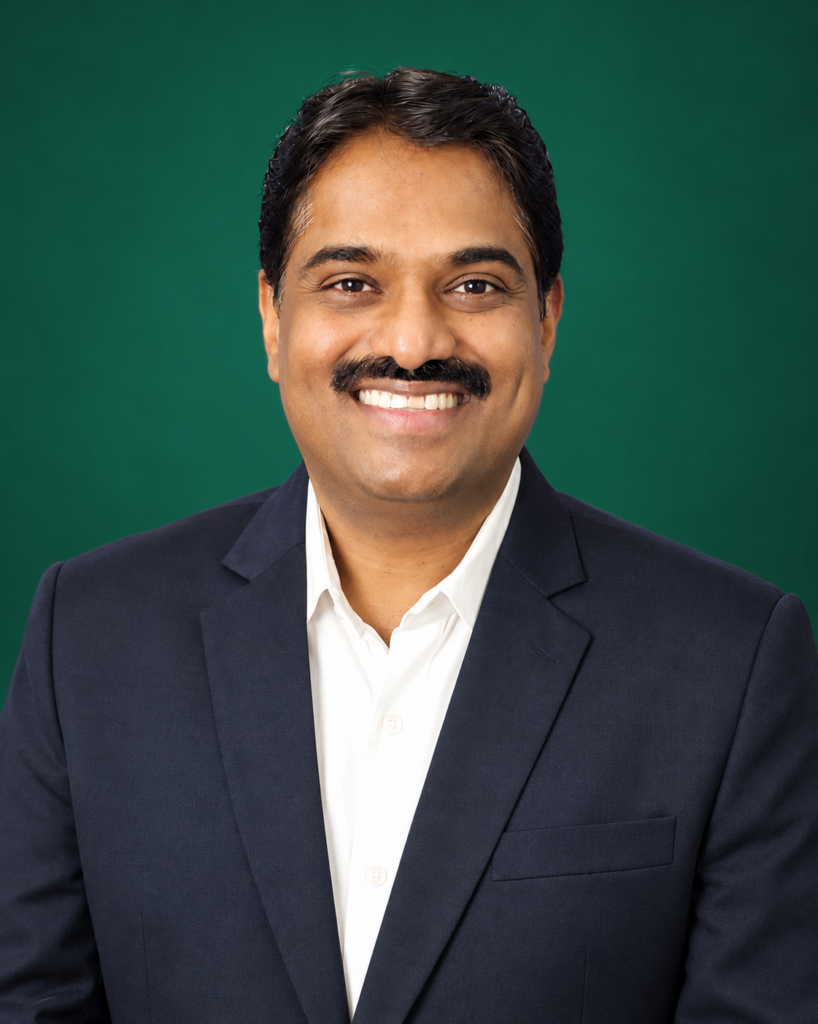
This is a personal account of Dr. Sarang Patil’s own path, written in his own voice. References to Ayurveda, yoga, Shivambu Chikitsa, and other traditional practices reflect his family and educational background and are presented here as part of his personal history, not as medical guidance or a scientific claim. For educational content on these traditions and how they relate to modern healthcare, see the site’s Digestive Health, Yoga & Mind-Body, and Ayurveda & Traditional Health sections. This account does not replace professional medical advice, diagnosis, or treatment.