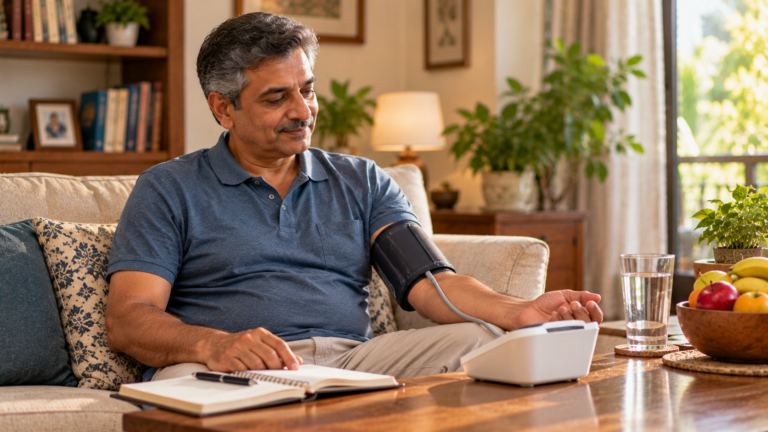
Type 2 diabetes is not a sugar problem. It is an insulin problem. This distinction matters enormously for how you manage it — and how much lifestyle can add to medical care.
Most patients I see have been told to “watch their sugar” and given a blood sugar target to hit. Very few have been told that type 2 diabetes develops slowly over years, that lifestyle changes can make a real difference in its early stages, that the diet changes that actually help are not what they think, and that there is one simple movement habit that can lower blood sugar spikes after meals. This article covers all of that.
What is actually happening in type 2 diabetes
For years before diagnosis, your cells stop responding normally to insulin — a state called insulin resistance. Your pancreas compensates by producing more and more insulin to force glucose into the cells. At some point, the pancreatic beta cells that make insulin become exhausted from the overwork. When they can no longer compensate, blood sugar rises and the diagnosis is made.
This means type 2 diabetes is the end stage of a long process. And it means the earlier in that process you act, the more room there is for lifestyle changes to help. Pre-diabetes (fasting glucose 100–125 mg/dL, or HbA1c 5.7–6.4%) is the window where lifestyle changes can make the biggest difference to blood sugar.
Why Indians develop diabetes at lower weights
South Asians develop type 2 diabetes at a significantly lower BMI than Western populations — often at a weight that would be considered “healthy” by standard charts. The reason is visceral fat: fat stored around and inside the organs, particularly the liver and pancreas, rather than under the skin.
Indians tend to store fat viscerally even at normal weights — a pattern called “thin fat” or TOFI (thin outside, fat inside). Visceral fat directly causes insulin resistance and impairs pancreatic function. A person with a BMI of 24 can have the metabolic profile of someone with a BMI of 32 if their visceral fat is high. This is why waist circumference (over 90 cm in Indian men, over 80 cm in Indian women) is a better risk indicator than weight or BMI alone.
The diet changes that actually move HbA1c
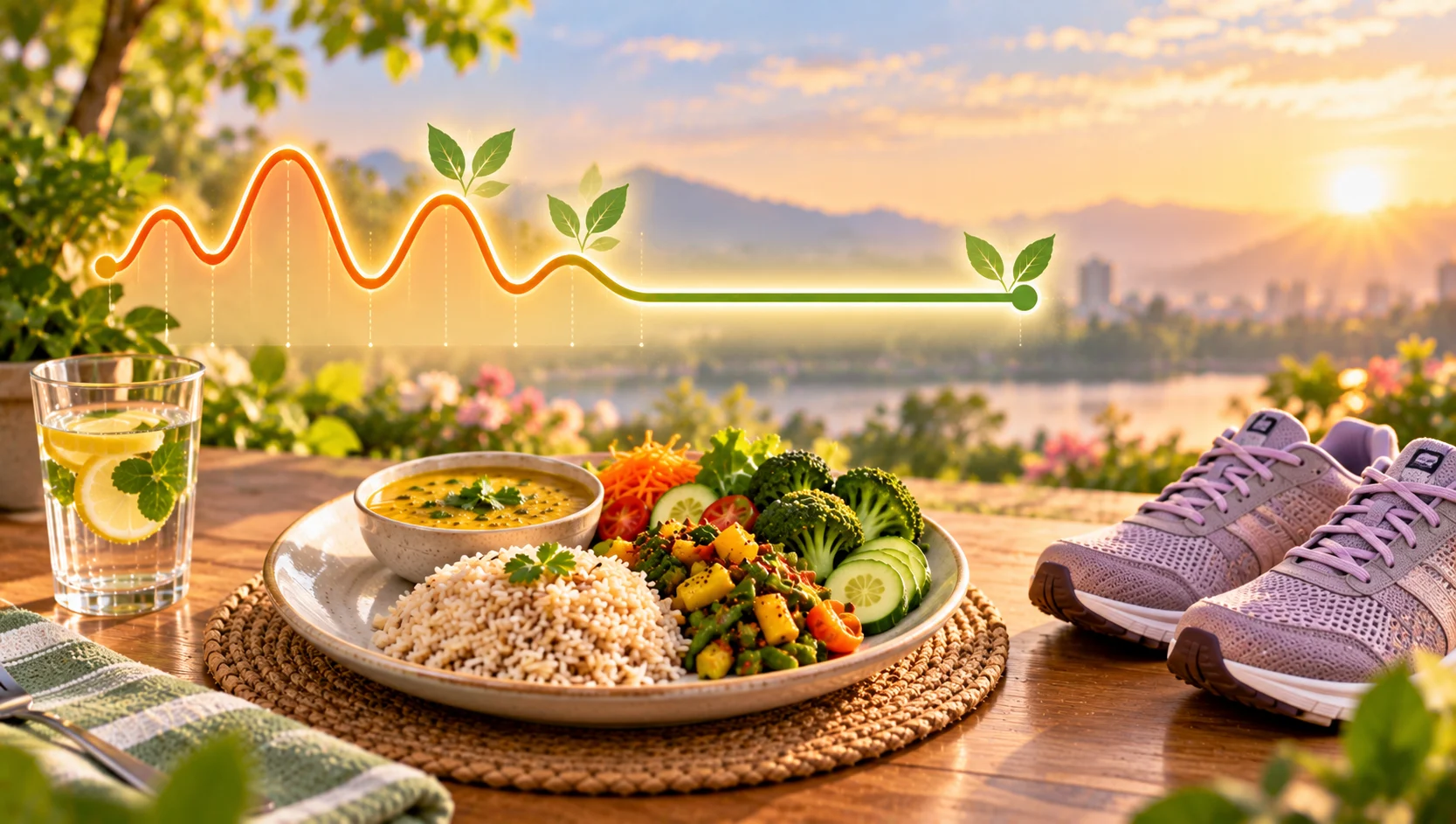
Food order at every meal. Eating vegetables and protein before carbohydrates — not alongside them, but before — reduces the post-meal glucose spike by 30–40% for the same meal. The mechanism: fibre and protein slow gastric emptying, so glucose from the carbohydrate enters the bloodstream more gradually. This is one of the most underused tools in diabetes management, and it costs nothing.
Replacing refined carbohydrates with legumes. Rajma, chana, moong, masoor dal — these raise blood sugar far more slowly than rice or wheat because of their fibre and protein content, despite also being carbohydrates. Replacing one serving of plain rice or two chapatis with a cup of dal and a small amount of rice typically reduces the meal’s glycaemic impact by over half.
Vinegar before high-carb meals. One to two tablespoons of apple cider vinegar or regular white vinegar in water before a high-carbohydrate meal has reduced the post-meal glucose spike by around 20% in some small studies. The proposed mechanism is that acetic acid slows the enzyme that breaks starch down to glucose. Research is limited and vinegar does not suit everyone (for example with acid reflux or some medicines), so check with your doctor first.
Cooling and reheating rice and potatoes. When rice or potatoes are cooked and then cooled (overnight in the refrigerator), their starch structure changes to resistant starch — which behaves like fibre metabolically and has a much lower glycaemic impact. Reheating does not fully undo this change. Day-old rice is genuinely better metabolically than freshly cooked rice.
The ten-minute walk after meals
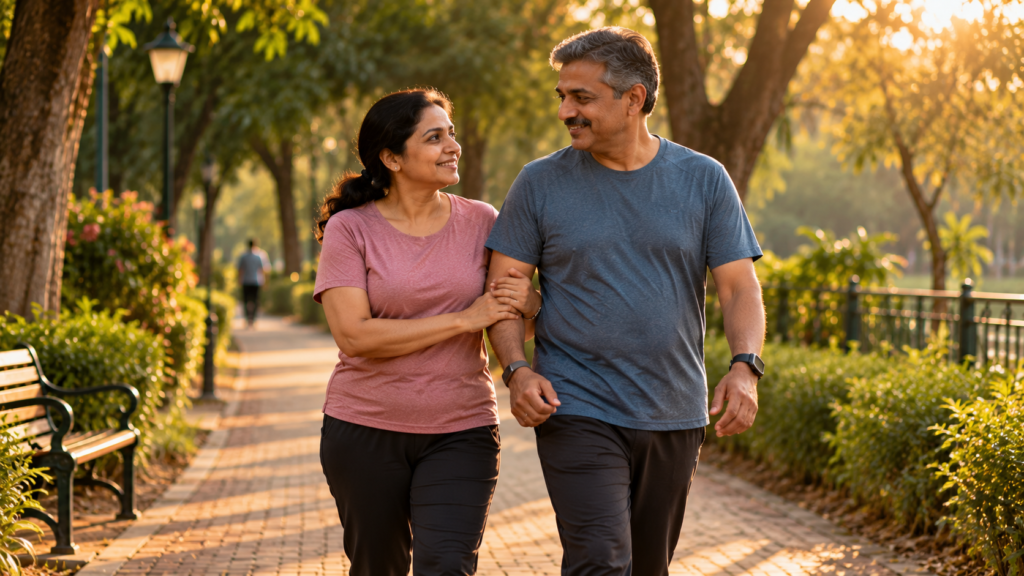
A ten-minute walk within 30 minutes of finishing a meal reduces the post-meal blood sugar spike by approximately 30% compared to sitting. In some studies, short walks after meals lowered the spike more than one longer walk done at another time.
The mechanism: muscle contraction during walking activates a glucose transporter (GLUT4) that pulls glucose from the bloodstream into muscle cells independently of insulin. This means walking after meals reduces blood sugar even when insulin resistance is severe.
This is the single most impactful habit change I recommend to every patient with pre-diabetes or diabetes. Not a gym membership. Not an hour of exercise. Ten minutes after each meal, three times a day.
On medications — what I see in practice
Metformin is the most widely used first medication for type 2 diabetes, with a long record of evidence. It reduces insulin resistance, has cardiovascular benefits beyond blood sugar control, and has been in use for over 60 years. I routinely see patients who resist taking it because they feel it means they’ve “failed” — this is the wrong frame. Starting metformin early, alongside lifestyle changes, may help protect the pancreatic beta cells that would otherwise exhaust themselves compensating for insulin resistance.
GLP-1 receptor agonists (semaglutide, liraglutide) are now available in India. They reduce HbA1c significantly, cause meaningful weight loss, and have cardiovascular and kidney-protective effects. For patients with obesity-driven diabetes and cardiovascular risk, they are transformative. The cost has dropped significantly and is expected to continue dropping.
SGLT2 inhibitors (dapagliflozin, empagliflozin) — also now available — are particularly useful when there is concurrent heart failure or kidney disease.
Can type 2 diabetes go into remission?
Sometimes, but this is a conversation for you and your doctor. “Remission” means blood sugar stays in the normal range without diabetes medication for a sustained time. In studies, some people with early-stage diabetes (HbA1c under 8%, duration under five years) reached remission after significant weight loss (10–15% of body weight), particularly when that weight loss reduced visceral and pancreatic fat. In the DiRECT trial, 46% of participants were in remission at one year after an intensive, medically supervised dietary programme. Please do not stop or change any medicine on your own.
It becomes progressively harder the longer diabetes has been present, because beta cell loss accumulates over time. Even so, sustained lifestyle changes can help many people improve their blood sugar control, and their doctor may be able to reduce how much medication they need.
The tests that matter beyond HbA1c
HbA1c tells you your three-month average blood sugar. What it does not tell you: how much your blood sugar is swinging (time-in-range), what is happening specifically after meals, or whether your kidneys and eyes are being affected. I routinely check fasting and post-meal glucose, urine microalbumin (early kidney damage marker), and an annual eye examination for every diabetic patient. These are the places damage accumulates silently before HbA1c looks alarming.
Start somewhere. The post-meal walk costs nothing. The food order change costs nothing. The dal-for-rice swap costs less. The compound effect of these three habits, sustained over months, is more than most people expect — and they are the foundation on which any medication works better.