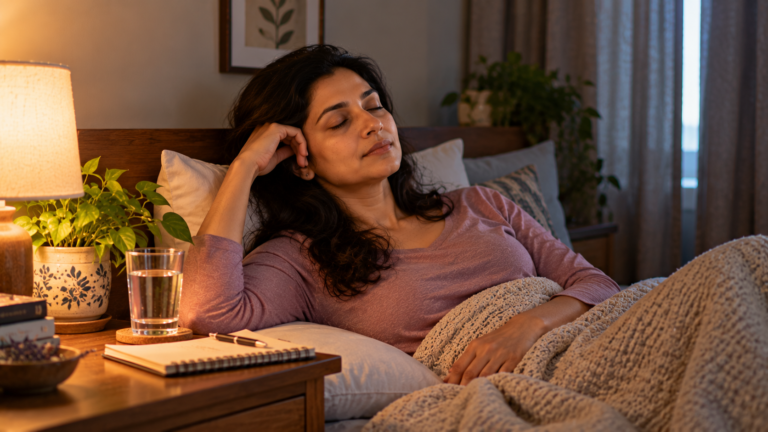
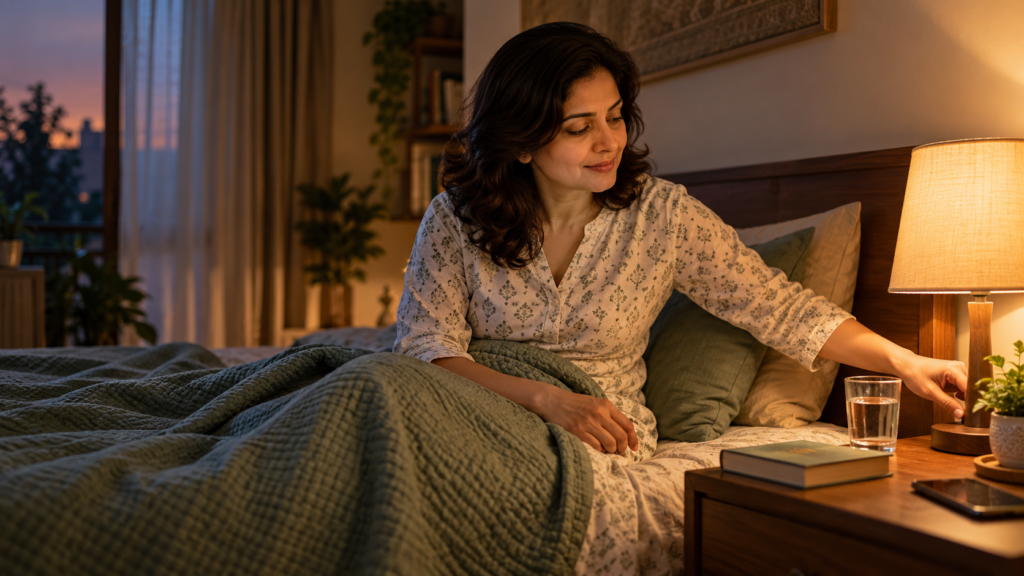
Good sleep is built in the evening, not at the moment you get into bed. A few small habits, repeated daily, tell your body that the day is ending. You do not need all of them. Start with two or three and see how you feel after a week or two.
Keep the same sleep and wake time
Going to bed and waking up at about the same time every day, including weekends, helps your body clock settle. Choose a wake-up time you can keep, then count back about seven to eight hours.
Dim the lights and put screens away
Bright light late in the evening tells the brain it is still daytime. In the last hour before bed, lower the lights and try to keep phones, television and laptops away. If you must use a screen, keep it dim and at arm’s length.

Eat lightly and early
A heavy meal close to bedtime can cause discomfort and heartburn. Try to finish dinner two to three hours before sleep, and keep it light and simple. A short, easy walk after dinner is a pleasant way to wind down.
Give your mind a place to land
If your mind races at night, take two minutes before bed to write down tomorrow’s tasks and anything worrying you. Then try slow breathing: breathe in through the nose for a count of four and out slowly for a count of six, for a few minutes. Stop if you feel dizzy.
Make the bedroom cool, dark and quiet
Most people sleep better in a cool, dark, quiet room. A fan, thicker curtains or an eye mask can help. Keep the bed for sleep, and get up for a short time if you have been awake for a long while, then return when you feel sleepy.

Be careful with caffeine and alcohol
Tea, coffee, colas and some energy drinks contain caffeine, which can stay in the body for many hours. Try to avoid them after lunch if sleep is a problem. Alcohol may make you drowsy at first, but it tends to disturb sleep later in the night.
When to see a doctor
Please speak to a doctor if trouble sleeping lasts for more than a few weeks, if you snore loudly with pauses in your breathing, if you feel very sleepy during the day, or if low mood or anxiety is affecting your nights. These problems often have causes that can be treated.
This article is for general education. It does not replace advice from your own doctor.