
Pain during menses (dysmenorrhea) accompanied by PMS (Premenstrual Syndrome) is a very common yet highly disruptive issue caused by the release of hormone-like compounds called prostaglandins, which make the uterus contract to shed its lining.
When menstrual pain and PMS symptoms worsen, a combination of targeted medical treatments, home interventions, and lifestyle shifts can help you manage the distress effectively.
1. First-Line Medical Interventions
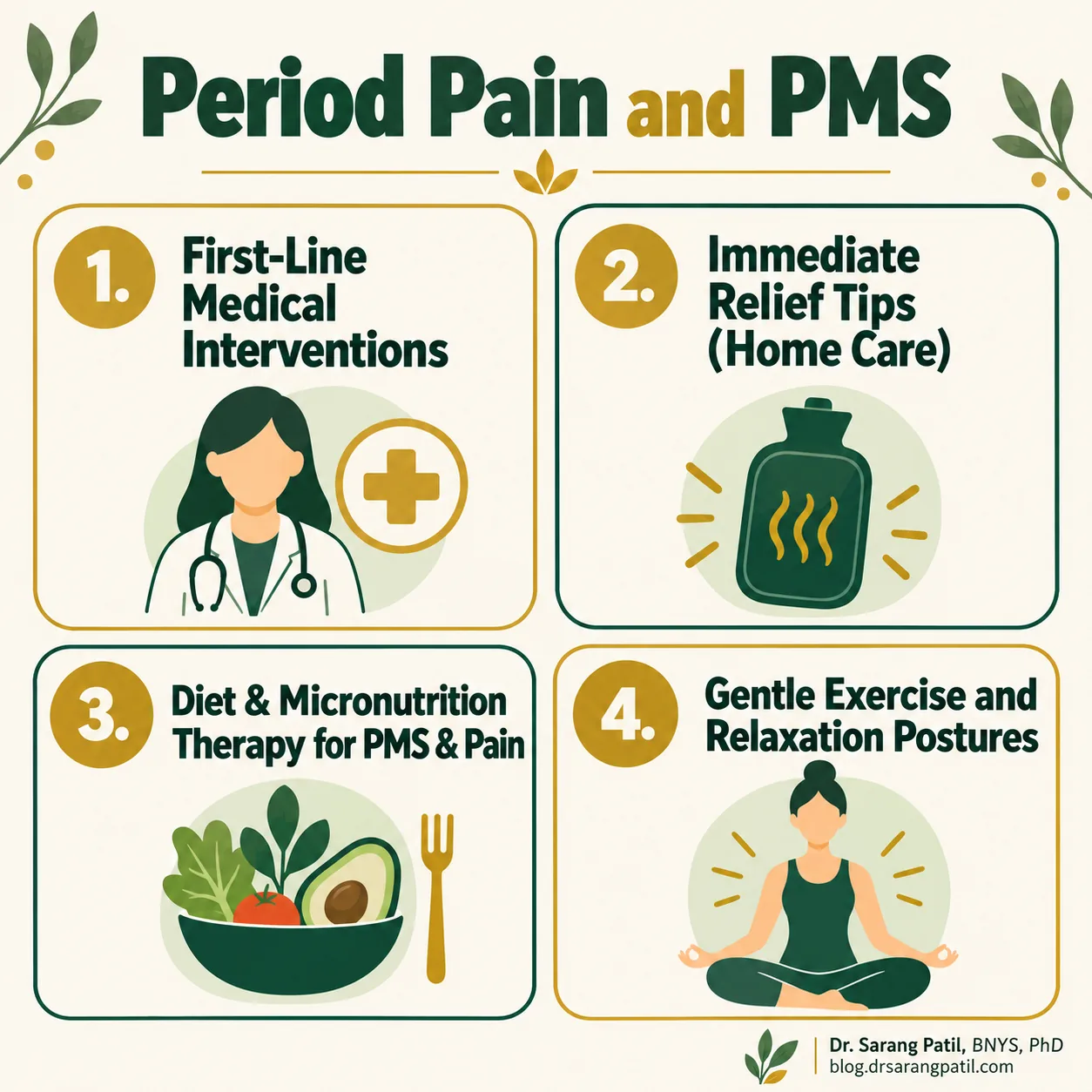
If the pain begins to interfere with your daily life, a gynaecologist can evaluate your symptoms and recommend appropriate clinical approaches:
Anti-inflammatory Support: Nonsteroidal anti-inflammatory drugs (NSAIDs) are often used to directly lower the production of prostaglandins. For the best result, healthcare providers generally recommend starting these medications as soon as the cramps or the period begins, rather than waiting for the pain to become severe.
Muscle Relaxants: Antispasmodic medications may be prescribed to help relax the smooth muscles of the uterus, bringing relief from intense, sharp cramping.
Hormonal Regulation: For long-term management of severe dysmenorrhea and PMS, medical professionals frequently use hormonal options such as oral contraceptive pills, patches, or hormonal intrauterine devices (IUDs). These treatments work by thinning the uterine lining and reducing the hormonal fluctuations that trigger pain and mood disturbances.
2. Immediate Relief Tips (Home Care)
- Targeted Heat Therapy (Duration & Frequency): Apply a pleasantly warm heating pad or hot water bottle to your lower abdomen or lower back for 15 to 20 minutes at a time, 2 to 3 times daily as needed.
• Encouraging Note: Gentle warmth dilates local blood vessels and gently unwinds tight uterine muscles, bringing natural and immediate soothing comfort without pills. - Warm Hydration & Herbal Teas (Quantity & Routine): Sip 8 to 10 glasses of warm water throughout the day. Enjoy 1 to 2 cups of freshly steeped ginger or chamomile tea between meals.
• Encouraging Note: Staying well-hydrated flushes sodium, minimizes bloating, and relaxes muscle spasms across your abdomen.
3. Diet & Micronutrition Therapy for PMS & Pain
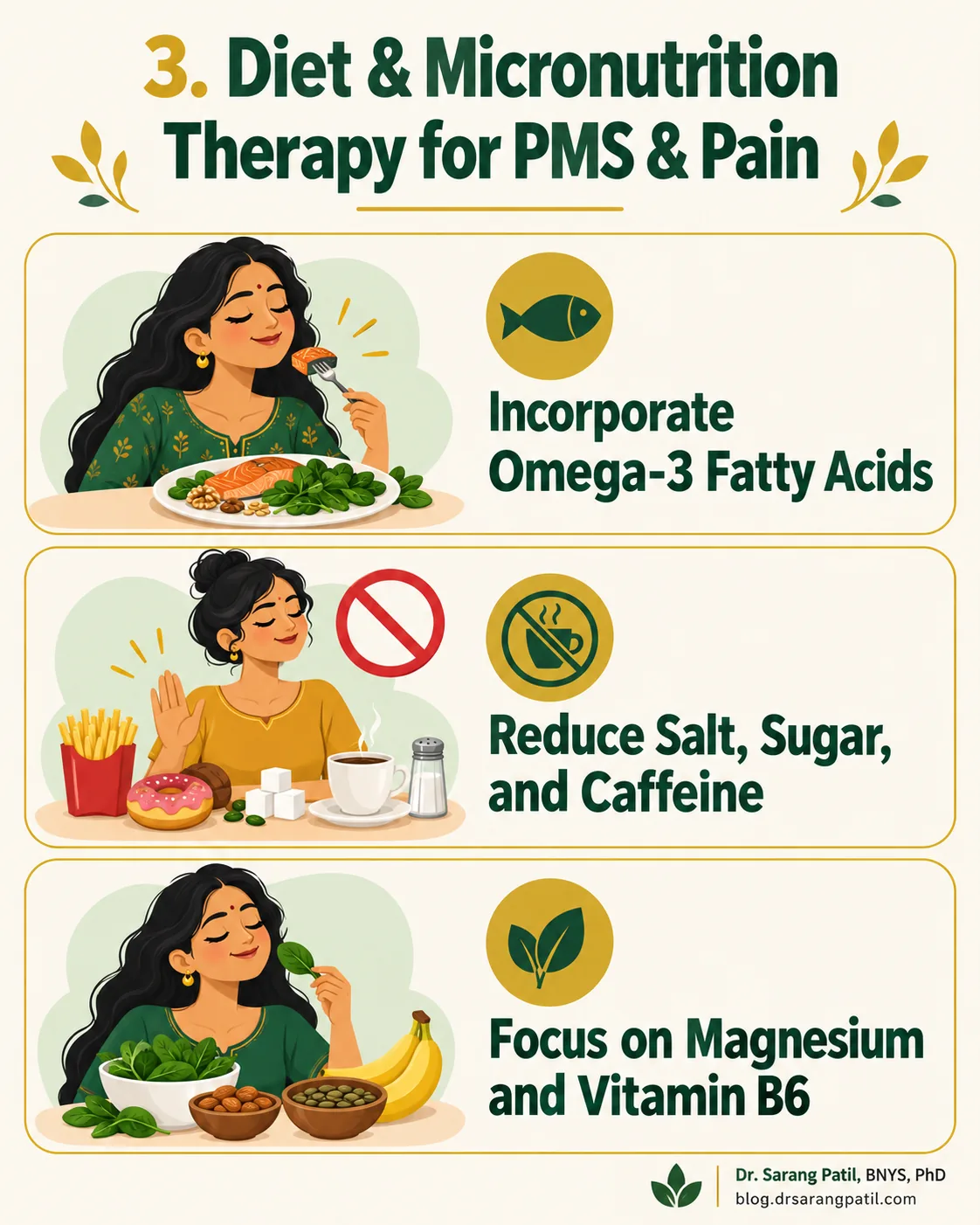
Modifying what you eat in the week leading up to your period can help manage inflammation and emotional PMS symptoms:
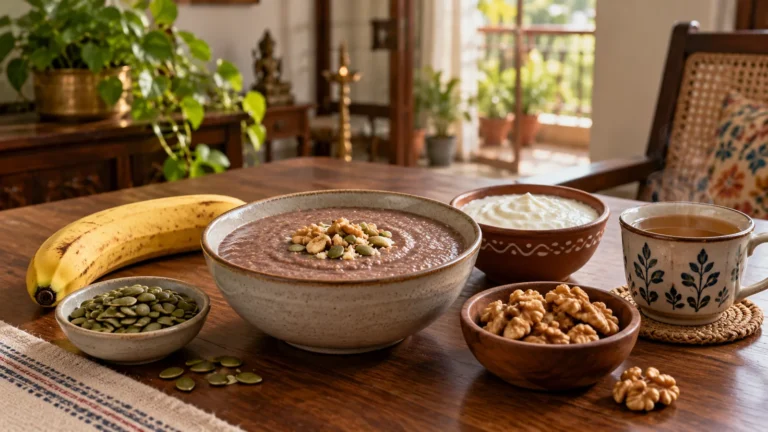
Incorporate Omega-3 Fatty Acids: Eating foods rich in omega-3s, such as walnuts, flaxseeds, and chia seeds, helps naturally lower overall inflammation in the body.
Reduce Salt, Sugar, and Caffeine: Excess salt causes fluid retention and bloating. High sugar intake and caffeine can worsen anxiety, irritability, sleep disturbances, and breast tenderness.
Focus on Magnesium and Vitamin B6: Magnesium helps relax smooth muscles, while Vitamin B6 supports the regulation of mood-boosting neurotransmitters. Good dietary sources include bananas, dark leafy greens, pumpkin seeds, soaked almonds, and whole grains.
4. Gentle Exercise and Relaxation Postures
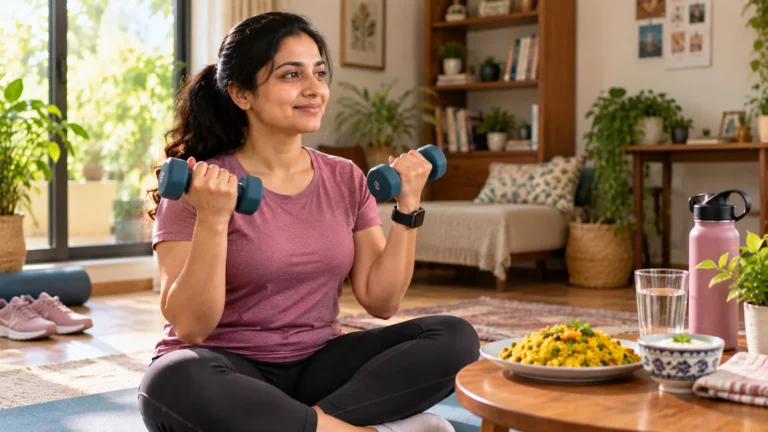
While strenuous workouts should be avoided during heavy cramping days, light, gentle movement releases endorphins, which act as the body’s natural pain relievers:
- Restorative Yoga Postures (Duration & Flow): Spend 3 to 5 minutes in restorative poses like Child’s Pose (Balasana), Bound Angle Pose (Baddha Konasana), or Legs-Up-The-Wall (Viparita Karani). Breathe smoothly and move without any strain.
• Encouraging Note: This redirects oxygen-rich blood to the pelvic floor and stimulates your brain to release natural mood-lifting, pain-relieving endorphins. - Pelvic Tilts: Gentle pelvic tilts while lying down can help ease structural tension in the pelvic floor and lower spine.
Want a Personalized Plan Based on Your Reports?
These simple home steps are an effective foundation for healing. For a comprehensive integrative routine tailored to your clinical reports and lifestyle, start with a direct conversation with Dr. Patil. Continue your current medications; as your health markers improve, next steps are guided safely together.
Frequently asked questions
What causes period pain?
Hormone-like compounds called prostaglandins make the uterus contract to shed its lining, and those contractions cause the cramps.
Does a heating pad really help period cramps?
Yes. Heat on the lower abdomen or lower back improves blood flow and relaxes the uterine muscles, and the relief can come close to that of standard pain relievers.
Which yoga poses help with period pain?
Gentle restorative poses such as Child’s Pose (Balasana), Bound Angle Pose (Baddha Konasana) and Legs-Up-The-Wall (Viparita Karani), plus pelvic tilts while lying down.
Also read: PCOS: a metabolic condition, not just a hormonal one
Next in this series: What to Eat for Period Pain and PMS: Nutrients and a One-Day Diet Chart (Part 2)